Ingredients
Method
prepare the pork
- Pat the pork tenderloin dry with paper towels and trim away any visible silverskin. Using a sharp knife, score the surface in a crosshatch pattern, being careful not to cut into the meat. Season generously with salt and pepper, then rub the minced garlic and dried thyme all over the surface.
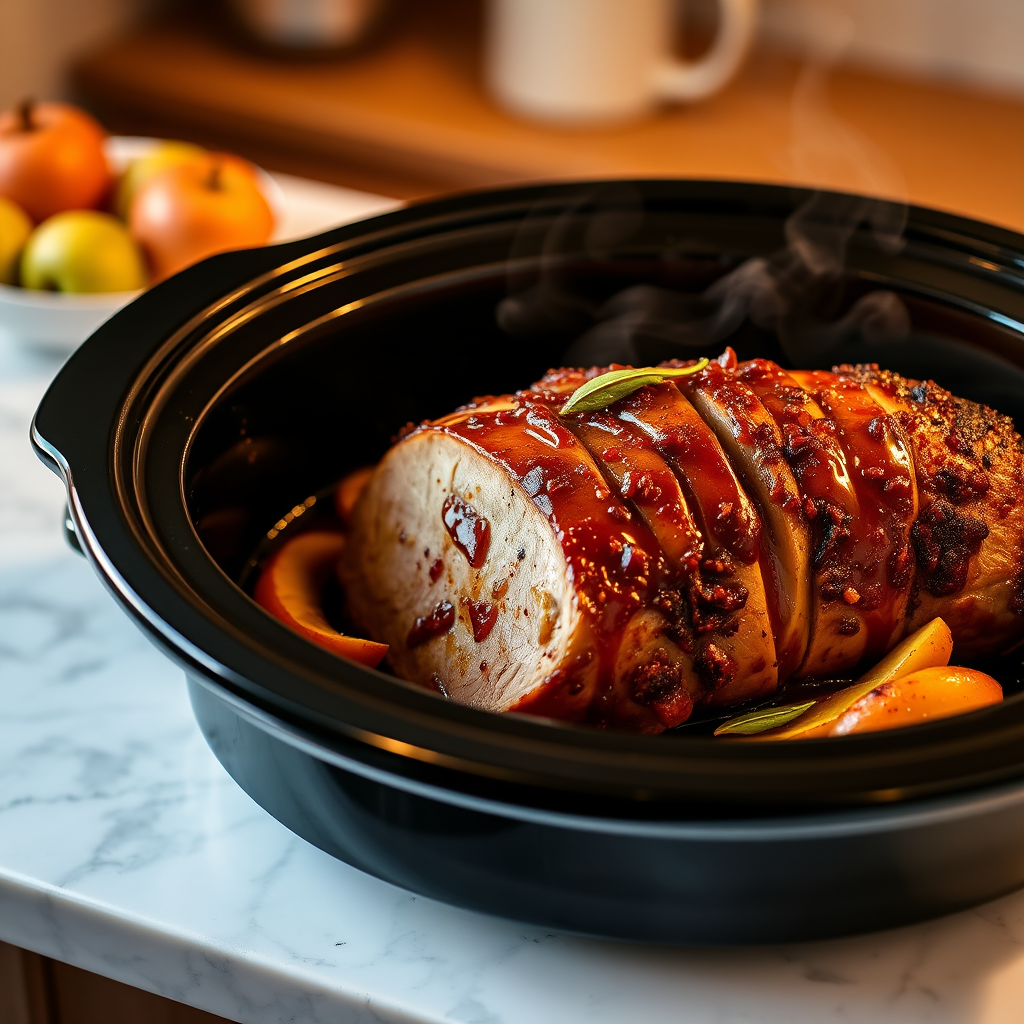
- Place the tenderloin in a 6-quart slow cooker. Add the apple cider, apple cider vinegar, and Dijon mustard around the meat — do not cover the pork completely with liquid. Cover and cook on low for 6 to 7 hours, or until the internal temperature reaches 145°F according to a meat thermometer.
make the glaze
- While the pork cooks, reduce the apple cider in a small saucepan over medium heat until it has thickened by about half. Transfer to a small saucepan and whisk in the cornstarch slurry. Simmer for 1 to 2 minutes until glossy and slightly thickened. Remove from heat and stir in the butter and fresh thyme leaves.
- When the pork is done, transfer it to a cutting board and tent with foil. Let it rest for 10 minutes. Meanwhile, skim excess fat from the slow cooker juices and whisk 2 tablespoons of the reduced cooking liquid into the glaze to add depth. Brush the glaze generously over the pork.
crisp the apples and sage
- Heat a large skillet over medium-high heat and add the butter. Add the sliced apples and sage leaves in a single layer, working in batches if necessary. Cook for 2 to 3 minutes per side until golden brown and caramelized. Sprinkle with flaky sea salt immediately while still hot.
- Slice the rested pork tenderloin into 1/2-inch medallions. Arrange the glazed pork on serving plates and top with the warm crispy apple and sage mixture. Drizzle any remaining pan juices over the top before serving.
Notes
I always tie the tenderloin with kitchen twine into a uniform shape — it cooks evenly and makes slicing much easier. When making the glaze, simmer it on the stovetop until it coats the back of a spoon; if it’s too thin, it won’t cling to the pork.