
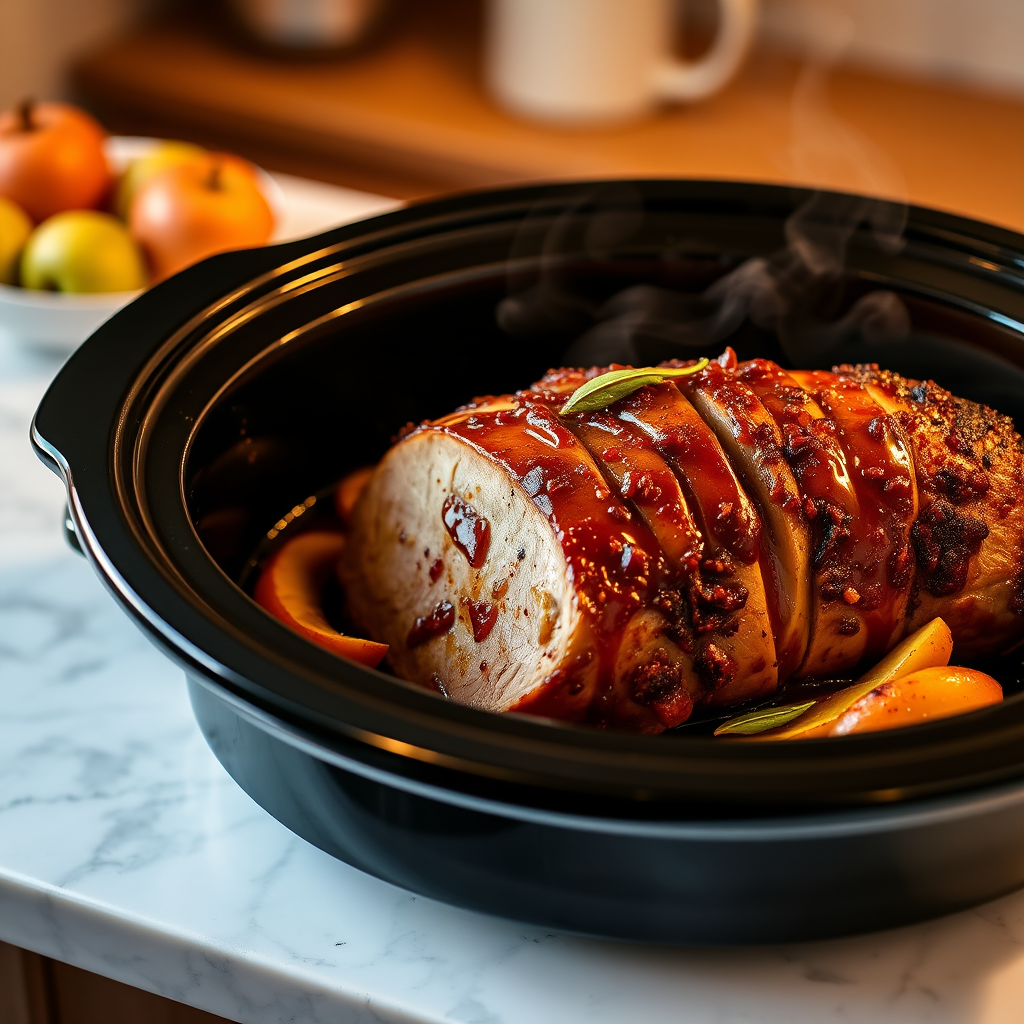
There’s something about the smell of sweet, spiced cider mingling with caramelized apple that instantly makes my kitchen feel like home, especially when the air is crisp outside. This tenderloin comes out so tender it practically falls apart, and that crispy sage-apple topping adds just enough crunch to keep it interesting. I’ve been making this for family gatherings and holiday tables for years, and I always set aside a little extra pan roast to share with friends who know that good food is best when it’s made with patience and love.
Slow Cooker Apple Cider Glazed Pork Tenderloin with Crispy Apple and Sage Pan Roast
Ingredients
Method
- Pat the pork tenderloin dry with paper towels and trim away any visible silverskin. Using a sharp knife, score the surface in a crosshatch pattern, being careful not to cut into the meat. Season generously with salt and pepper, then rub the minced garlic and dried thyme all over the surface.
- Place the tenderloin in a 6-quart slow cooker. Add the apple cider, apple cider vinegar, and Dijon mustard around the meat — do not cover the pork completely with liquid. Cover and cook on low for 6 to 7 hours, or until the internal temperature reaches 145°F according to a meat thermometer.
- While the pork cooks, reduce the apple cider in a small saucepan over medium heat until it has thickened by about half. Transfer to a small saucepan and whisk in the cornstarch slurry. Simmer for 1 to 2 minutes until glossy and slightly thickened. Remove from heat and stir in the butter and fresh thyme leaves.
- When the pork is done, transfer it to a cutting board and tent with foil. Let it rest for 10 minutes. Meanwhile, skim excess fat from the slow cooker juices and whisk 2 tablespoons of the reduced cooking liquid into the glaze to add depth. Brush the glaze generously over the pork.
- Heat a large skillet over medium-high heat and add the butter. Add the sliced apples and sage leaves in a single layer, working in batches if necessary. Cook for 2 to 3 minutes per side until golden brown and caramelized. Sprinkle with flaky sea salt immediately while still hot.
- Slice the rested pork tenderloin into 1/2-inch medallions. Arrange the glazed pork on serving plates and top with the warm crispy apple and sage mixture. Drizzle any remaining pan juices over the top before serving.
Notes
Food Safety Note: Always use a food thermometer to confirm your dish has reached a safe internal temperature before serving, and follow your country’s official food safety guidelines for meat, poultry, and slow-cooking. Cook times in this recipe are estimates — appliance and ingredient variation affects actual cook time.